In 2017, China met its 2020 carbon intensity (CO2 emissions per unit of GDP) target three years ahead of schedule: at the end of 2017, China's carbon intensity was 46% lower than its 2005 level, fulfilling its commitment to reduce them by 40-45% from the 2005 level by 2020. The pledge was made in 2009 and later included in the 2015 country's commitments under the framework of the Paris Agreement.
The decrease in the CO2 intensity can be attributed to the strong economic growth, as the Chinese government reported that its economy grew by 1.48 times over the 2005-2015 period, and to China's ambitious climate policies, including replacing coal by gas in the power and heating sectors and cutting coal consumption. Consequently, China's carbon intensity dropped by 38.6% (-6.6%/year in 2016 and -5.1%/year in 2017). China expects to have cut its carbon intensity by 60-65% by 2030 from the 2005 levels.
China also launched a nation-wide emissions trading scheme (ETS) in order to reduce carbon emissions in December 2017, building up on the existing regional schemes in seven provinces. The system will initially cover the country's power generation sector and in particular power generators with emissions of at least 26,000 tCO2/year. It will be later extended to the rest of the economy, as initial plans spanned eight industries: electricity, chemicals, petrochemicals, construction, steel, non-ferrous metals, paper and aviation. 1,700 companies emitting a total of 3.3 Gt/year of CO2 will be included in the ETS, which will cover around 5 Gt/year of emissions by 2020.
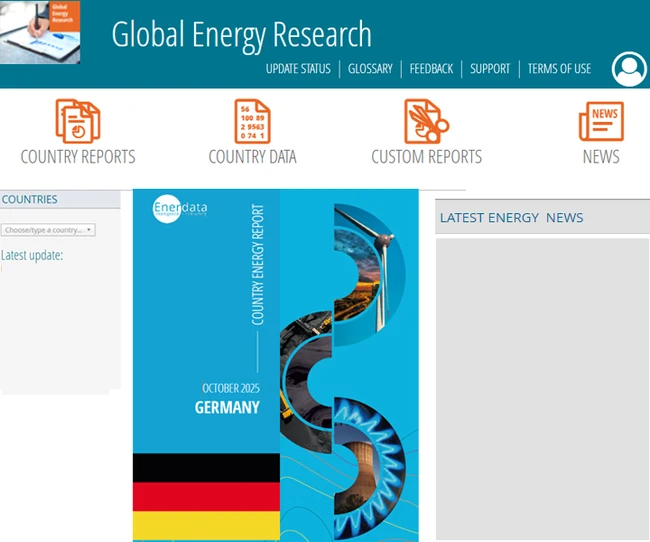
Interested in Global Energy Research?
Enerdata's premium online information service provides up-to-date market reports on 110+ countries. The reports include valuable market data and analysis as well as a daily newsfeed, curated by our energy analysts, on the oil, gas, coal and power markets.
This user-friendly tool gives you the essentials about the domestic markets of your concern, including market structure, organisation, actors, projects and business perspectives.