The US Energy Information Administration (EIA) reported that the 2017 global increase of liquid fuels supply is mainly driven by a surging output of lighter (less than 1% sulfur and low density) and higher-prices crude oil, which are produced mostly in Libya, Nigeria and the United States. Although the OPEC has reduced the global supply of heavy and medium-quality crude oil (more than 1% of sulfur and high density), the global production of light crude oil has been increasing since March 2017. Some of the reasons behind is the non-participation of Libya and Nigeria in the OPEC production cuts and the rise of US light-density crude oil production.
Besides, the EIA deems differences in sulfur content and density also affect the price of crude oil and where it can be processed. Heavy and medium-quality crude oil requires more complex refinery processing in order to meet low-sulfur fuel specifications and to avoid damaging refinery units. It needs requires additional refinery units such as crackers, cokers, and hydrotreaters in order to yield light products.
The price of crude oil and refinery complexity also affect profitability and the EIA estimates that a wider price differential between heavy and medium crude oils and light crude oils benefits more complex refineries. In 2017, this price differential decreased and reduced the competitive advantage of some more complex refineries.
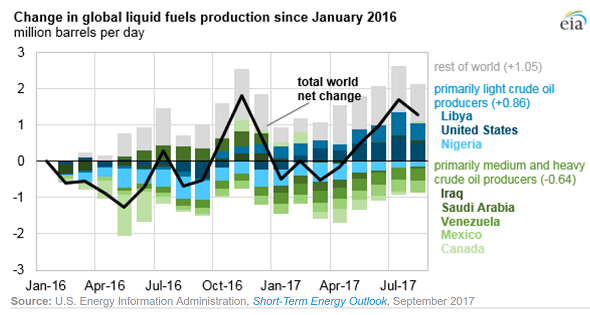
Source: EIA
Interested in Global Energy Research?
Enerdata's premium online information service provides up-to-date market reports on 110+ countries. The reports include valuable market data and analysis as well as a daily newsfeed, curated by our energy analysts, on the oil, gas, coal and power markets.
This user-friendly tool gives you the essentials about the domestic markets of your concern, including market structure, organisation, actors, projects and business perspectives.