See also

The Office of Energy Efficiency (OEE) at Natural Resources Canada (NRCan), the Government of Canada’s lead on energy efficiency, assesses the long-term impacts of energy efficiency policies and programs on the energy system, evaluating progress toward established targets.
To achieve this objective, the OEE first collaborated with Enerdata in 2024 to evaluate the impact of implementing specific policies and program strategies in anticipation of the 2025 G7 Leaders’ Summit held in Kananaskis, Alberta. More recently, the OEE commissioned Enerdata to develop a customised, robust, and functional model to increase its internal capabilities for assessing the long-term impacts of various energy efficiency policies and programmes in Canada. Enerdata was able to meet this need by combining its expertise in modelling, energy data, training, and web development.
The first step was to develop a model tailored to the OEE’s needs and to provide specific tools to facilitate its ownership: user interfaces dedicated to modellers, and tools for visualising and sharing results with internal audiences.
Thanks to its knowledge and experience with the POLES-Enerdata model, and its prior collaboration with the OEE, Enerdata was uniquely positioned to develop the most appropriate model for the OEE’s specific needs.
To feed this model, Enerdata also supplied the input data, serving as the basis for impact assessment, by leveraging its own databases, which are renowned for their consistency and comprehensiveness. This data included Canadian historical data for all model variables (activity data, economic data, energy consumption, electric capacities and power generation, energy product flows, etc.) and reference data for projected years. This enabled the definition of a reference scenario aligned with the Canada Energy Regulator’s "Current Measures" trends, representing a trajectory that reflects measures currently in place. The model included historical values and a reference trajectory, enabling OEE teams to evaluate the impacts of selected policies and programmes by comparing their results with these reference values.
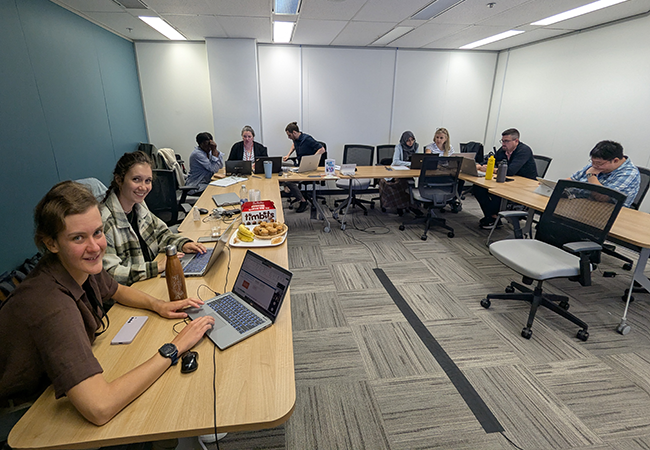
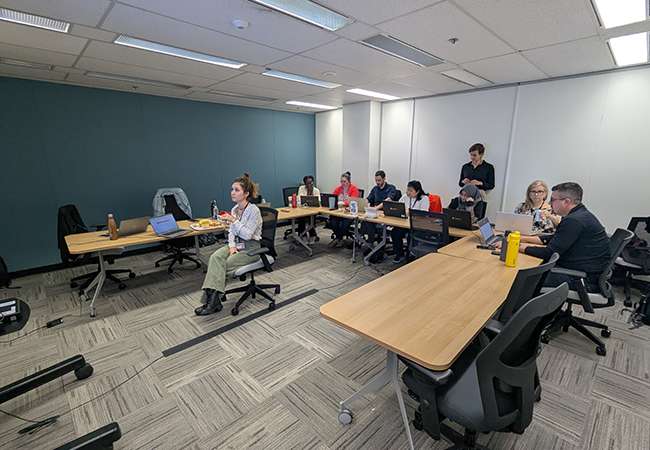
Another important component of the project was the training of OEE staff, particularly the modellers, to ensure their autonomy in using the model. Leveraging its modelling experts with recognised teaching skills, Enerdata designed and delivered a tailored in-person training workshop focused on the use of the model and its associated tools, as well as on result analysis. Additionally, Enerdata will continue to provide technical support throughout the model's adoption.
 |
 |
Finally, Enerdata deployed its web development teams to create and implement a data visualisation interface accessible to all OEE collaborators, thereby enabling simple and intuitive access to the model's key results. Our developers designed this interface to enable a seamless integration of the infrastructure within the departments IT environment.
All deliverables are supplied with comprehensive documentation, providing the OEE with a robust theoretical foundation in modelling principles and addressing the key challenges associated with such models. This holistic approach will empower the OEE to leverage the model’s full potential while ensuring a thorough understanding of its underlying mechanisms.