The US Energy Information Administration (EIA) estimates in its Annual Energy Outlook 2014 (AEO2014) that 351 GW of new power capacity could be added in the United States between 2013 and 2014 in the power sector and in end-use sectors. Projected future capacity additions are well below the average annual levels observed since 2000, and natural gas is the primary fuel source of the projected added capacity. Near-term additions (through 2016) average 16 GW per year, followed by additions of less than 9 GW per year through 2022, as the existing generating fleet will be sufficient to meet expected demand growth in most regions. From 2025 to 2040, annual additions increase to an average 14 GW per year, but remain below recent levels. Indeed, between 2000 and 2005, about 35 GW were installed every year by independent power producers in response to deregulation in the electric power sector. From 2006 through 2012, annual average capacity additions dropped to 19 GW, with 42% of the additions representing renewable technologies and 45% representing natural gas-fired technologies.
In the AEO2014 Reference case, natural gas-fired plants account for 73% of capacity additions (255 GW) from 2013 to 2040, compared with 24% for renewables, 3% for nuclear, and 1% for coal. Of the 83 GW of renewable capacity additions, 39 GW are solar photovoltaic (PV) systems (60% of which are rooftop installations) and 28 GW are wind (60% of which occur by 2015 to take advantage of production tax credits), as federal tax incentives, state energy programs, and rising fossil fuel prices increase the competitiveness of renewable electricity technologies. Nuclear additions total about 10 GW, including 6 GW of plants currently under construction and 4 GW projected after 2027. New coal plants total less than 3 GW, with more than 80% of that total currently under construction, as federal and state environmental regulations and uncertainty about future limits on greenhouse gas emissions reduce the attractiveness of coal-fired plants.
Interested in Power Plants?
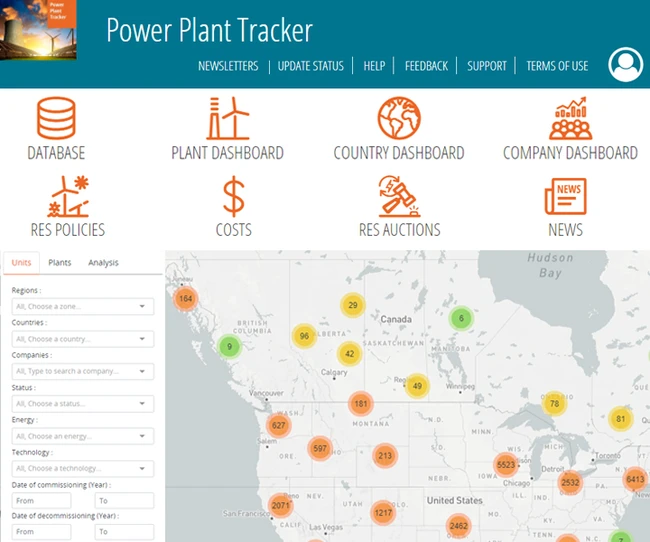
Enerdata has developed a market research service to screen, monitor and analyse the development of power generation assets.
Power Plant Tracker offers an interactive database and a powerful search engine covering power plants worldwide – including both installed and planned capacities for renewables and fossil fuels.