According to the United Nations Environment Programme (UNEP) Emissions Gap Report 2017, global greenhouse gas (GHG) emissions (including emissions from land use, land-use change and forestry, LULUCF) by 2030 could be between 13 GtCO2e and 15 GtCO2e higher than the level needed to keep global warming within 2 degrees Celsius (2°C) this century. In 2017, GHG emissions hit a record high of 53.5 GtCO2e after three years of decreases and may not peak by 2030.
The report focuses on the gap between the emissions reductions necessary to achieve the objectives agreed in the 2015 Paris Agreement and
the likely emissions reductions from full implementation of the Nationally Determined Contributions (NDCs). It concludes that if the emissions gap
is not closed by 2030, it is extremely unlikely that the objective of keeping global warming below the 2°C threshold can be reached even if the current NDCs are fully implemented.
The UNEP estimates that more ambitious NDCs will be required by 2020 and have to be developed by adopting or adapting best practice examples so that the gap can be closed by 2030.
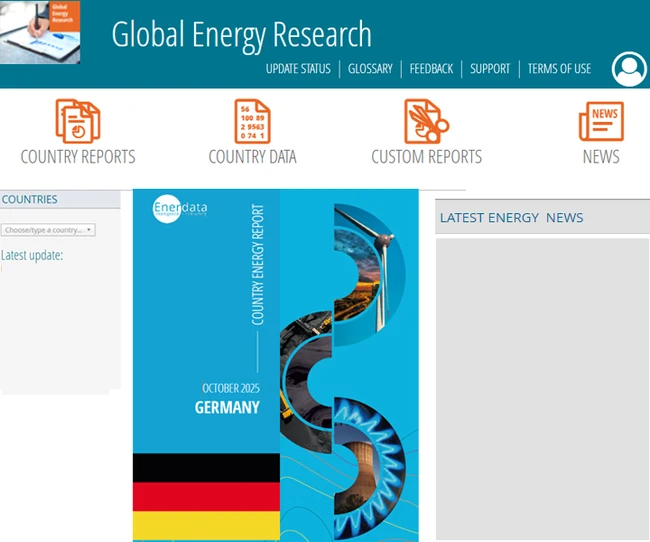
Interested in Global Energy Research?
Enerdata's premium online information service provides up-to-date market reports on 110+ countries. The reports include valuable market data and analysis as well as a daily newsfeed, curated by our energy analysts, on the oil, gas, coal and power markets.
This user-friendly tool gives you the essentials about the domestic markets of your concern, including market structure, organisation, actors, projects and business perspectives.