Kazakhstan and Russia have signed an agreement for construction of the first nuclear power plant in Kazakhstan, including the provision of a state-backed export credit to support financing for the project (Qazinform news agency, 28/05/2026). According to the head of Kazakhstan’s atomic energy agency, the project, which will feature two VVER-1200 Generation III+ reactors (2.4 GW), is estimated to cost approximately USD16.5bn (Reuters, 28/05/2026). Major construction work at the site is expected to begin in 2027, while the commissioning of the first unit is scheduled for 2034.
In April 2026, Kazakhstan adopted its Nuclear Industry Development Strategy through 2050. The roadmap states that at least three nuclear power plants are expected to be operational in the country by 2050. Development of the first plant is already underway, while progress continues on the second project, whose construction site was approved in January 2026. In parallel, the country is assessing small modular reactor (SMR) technologies for a potential third nuclear project. In light of expected growth in electricity demand, authorities are also evaluating the possibility of building a fourth plant (KEI, 21/04/2026).
Kazakhstan intends to capitalize on its substantial uranium reserves as the world’s leading producer, with output reaching 23.3 kt in 2024 and an estimated 25.8 kt in 2025, representing more than 40% of global production. According to our data, uranium production in the country has increased nearly sixfold since 2005, when output stood at 4.3 kt.
By 2050, Kazakhstan aims to generate 50% of its electricity from “alternative”, including nuclear or renewable energy sources. In 2024, coal remained the dominant source in the country’s power mix at 61% (-20 percentage points since 2010), followed by gas at 23% (+14 pp), hydropower at 10% (stable), and renewables, including wind and solar, at 6% (+6 pp) (Enerdata Global Energy Research).
Interested in Power Plants?
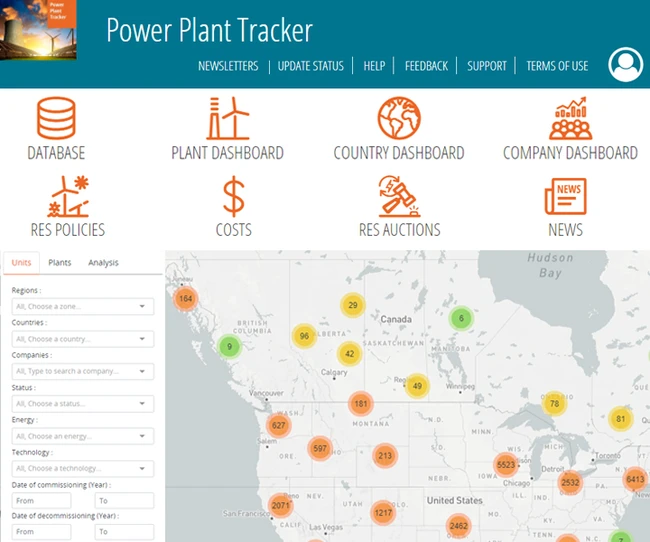
Enerdata has developed a market research service to screen, monitor and analyse the development of power generation assets.
Power Plant Tracker offers an interactive database and a powerful search engine covering power plants worldwide – including both installed and planned capacities for renewables and fossil fuels.