India’s Minister of New and Renewable Energy has announced that India ranks third globally in terms of renewable energy installed capacity, moving ahead of Brazil in the ranking (India’s Ministry of New and Renewable Energy statement, 08/04/2026). India achieved a total non-fossil capacity addition of 55.3 GW during FY 2025–2026, the highest increase in any year (the previous record was 29.5 GW during 2024–2025), according to the statement.
As of 31 March 2026, a total of 283 GW of capacity from non-fossil fuel sources had been installed in the country. This includes around 275 GW of renewable energy, comprising 150 GW solar, 56 GW wind, 12 GW bio energy, 5 GW small hydro, and 51 GW large hydro, as well as 9 GW of nuclear.
India achieved the milestone of 50% of its cumulative electric power installed capacity from non-fossil fuel sources in June 2025, five years ahead of the 2030 target set under its Nationally Determined Contribution (NDC) to the Paris Agreement (500 GW by 2030).
The Minister stated that India’s total power generation during 2025–26 (up to 31 March 2026) reached 1,846 TWh. The share of non-fossil fuels in total generation reached 29.2% in 2025–26 (539 TWh). The Minister also highlighted that in July 2025, India reached its highest-ever renewable energy share in electricity generation, with renewables meeting 51.5% of the country’s total electricity demand of 203 GW
Renewable energy installed capacity has increased by a factor of 3.6 since 2014, rising from 76 GW in March 2014 to 274 GW in March 2026, representing an increase of 198 GW, according to the statement.
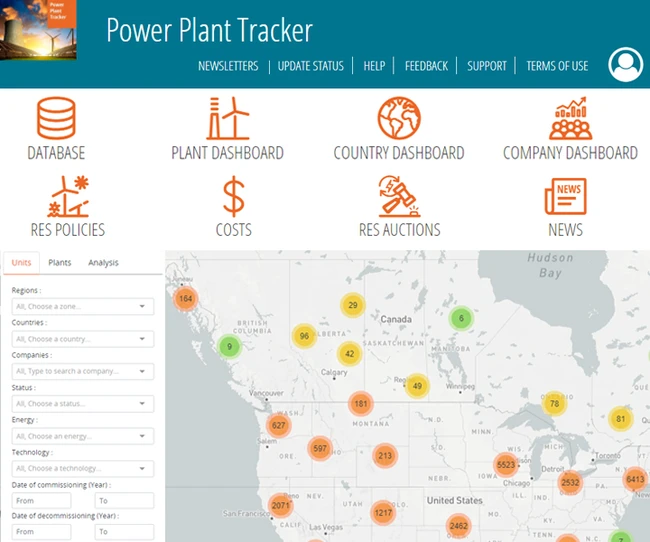
Interested in Power Plants?
Enerdata has developed a market research service to screen, monitor and analyse the development of power generation assets.
Power Plant Tracker offers an interactive database and a powerful search engine covering power plants worldwide – including both installed and planned capacities for renewables and fossil fuels.