Google has announced plans to develop a new data centre in Michigan (United States) through a partnership with US-based DTE Energy, committing to enable 2.7 GW of new clean resources to support the local grid (Google press release, 17/03/2026). The data centre will be located in DTE Energy's service territory, with Google currently evaluating a site in Van Buren Township. The company stated it will add clean, around-the-clock power directly to the grid to support the new facility and enhance the state's grid reliability.
Under the Clean Capacity Acceleration Agreement with DTE, the 2.7 GW of new resources will include solar power, advanced storage technologies, and demand flexibility. The agreement also aims to bring new clean resources online while supporting Michigan's transition away from coal-fired power, according to the company. Google will fully cover its electricity costs and infrastructure needs as part of its standard approach to building new data centres. The company stated that this approach is designed to protect local ratepayers and bolster the long-term resilience of the state's electricity grid.
This announcement comes as Google aims to secure power supply for the development of its data centres. In February 2026, the company signed two long-term Power Purchase Agreements (PPAs) with TotalEnergies to deliver up to 1 GW of solar capacity over 15 years to power data centres in Texas, US (KEI, 10/02/2026), and with Xcel Energy for 1.9 GW (1.4 GW of wind, 200 MW of solar and 300 MW/30 GWh of long-duration energy storage) for a data centre in Pine Island, Minnesota (United States) (KEI, 26/02/2026).
Interested in Power Plants?
Enerdata has developed a market research service to screen, monitor and analyse the development of power generation assets.
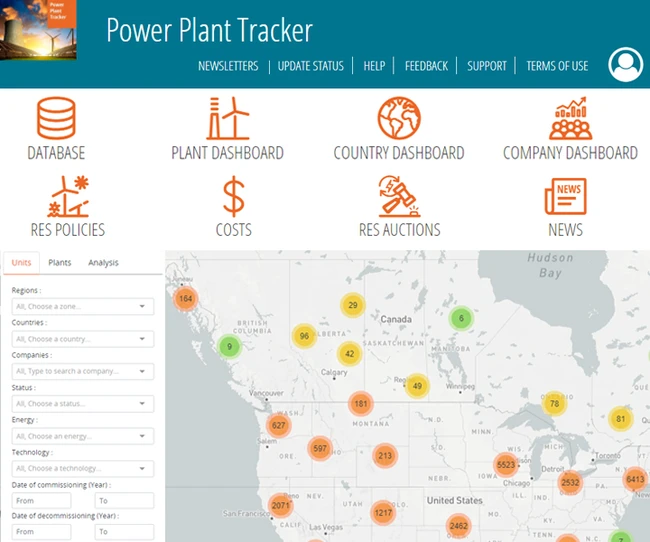
Power Plant Tracker offers an interactive database and a powerful search engine covering power plants worldwide – including both installed and planned capacities for renewables and fossil fuels.