See also

Energy Performance of Buildings Directive: A missed opportunity to set clear targets for buildings?
In March, EU lawmakers adopted the final version of the Energy Performance of Buildings Directive.
This brief reviews the directive's development and evaluates the repercussions of postponing the prohibition on gas boiler sales, employing two sensitivity analyses based on Enerdata's CEDF scenarios.
The European Parliament (EP) has approved the revised Energy Performance of Buildings Directive (EPBD), one of the key elements of the European Union's (EU) strategy to tackle climate change. The endorsed changes are expected to speed up the rate of building renovation towards more energy efficient systems. The EP intends to support further links between buildings and e-mobility infrastructure to support the power grids modernisation and stabilisation.
The regulation package aims to create a clear path towards a low and zero-emission building stock in the European Union by 2050 underpinned by national roadmaps to decarbonise buildings. It also encourages the use of information and communication technology (ICT) and smart technologies to support the introduction of automation and control systems in buildings. It will support the rollout of e-mobility infrastructure in all buildings. A new "smart readiness indicator" will be introduced and measure the buildings' capacity to interact with power grids ad use new electronic systems to adapt to the needs of the consumers. The revised EPBD also aims to integrate and strengthen long term building renovation strategies and combat energy poverty by renovating older buildings.
The EU building sector is Europe's largest final energy consumer (40%), while 75% of the buildings are labelled as energy inefficient. Approximately between 0.4% and 1.2% of the stock is renovated every year depending on the Member State.
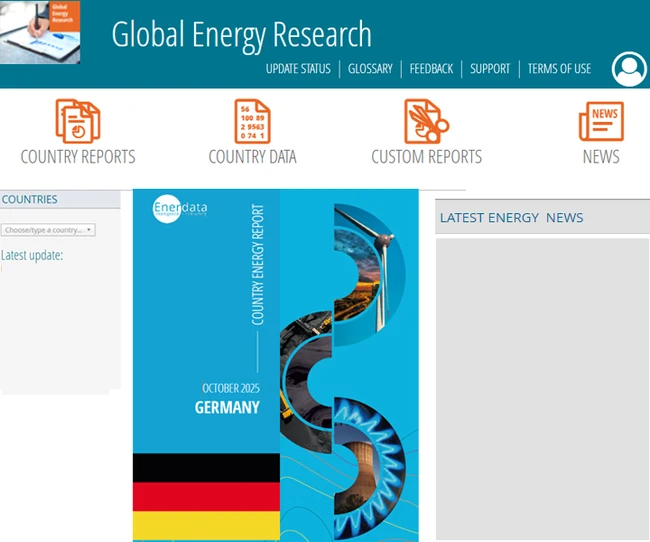
Interested in Global Energy Research?
Enerdata's premium online information service provides up-to-date market reports on 110+ countries. The reports include valuable market data and analysis as well as a daily newsfeed, curated by our energy analysts, on the oil, gas, coal and power markets.
This user-friendly tool gives you the essentials about the domestic markets of your concern, including market structure, organisation, actors, projects and business perspectives.