Egypt has released its updated first Nationally Determined Contribution (NDC), in which the country reviewed its emission reduction objectives for 2030. These goals are conditional to an outside support financing of US$246bn (US$196bn for mitigation interventions and US$50bn for adaptation interventions).
Conditionally, Egypt pledges to reduce its greenhouse gas (GHG) emissions in the power generation, transmission and distribution sector by 33%, or a 70 MtCO2eq reduction compared to a business-as-usual (BAU) scenario. This would make the country’s emissions reach 145 MtCO2eq instead of 215 MtCO2eq in this sector in 2030. The emissions under the mitigated scenario still represent a 65% increase from the 2015 base-year emissions (88 MtCO2eq). To achieve this target, the country aims at accelerating the scale-up of on-grid renewable energy by reducing coal capacity in the generation mix and replacing inefficient thermal power plants (conversion of simple cycle gas turbines to combined cycle power plants, installation of supercritical steam units).
For the oil and gas sector, Egypt pledges a 65% reduction in emissions (1.7 MtCO2eq reduction) compared to a BAU scenario to reach 0.9 MtCO2eq in 2030 (57% lower than in 2015). Measures foreseen include recovery and utilisation of associated gases generated from the crude oil fields (instead of flaring, the associated gases will instead be directed to gas processing facilities to produce LPG, natural gas, and condensates), extension of the gas pipeline network to help households switch towards cleaner fuels, low investment energy efficiency measures in petroleum companies to reduce 5% of the sector’s energy consumption.
For the transport sector, Egypt plans a 7% reduction in emissions (9 MtCO2eq reduction) compared to a BAU scenario to reach 115 MtCO2eq in 2030 (still 140% higher than in 2015). The government plans to drive low carbon modal shift from private passenger and freight vehicles into mass transit thanks to the expansion of the Cairo metro network, the development of the Alexandria Metro, the development of several rail lines, the transformation of public buses to operate on lower carbon intensive fuels (i.e. natural gas), greening of the civil aviation sector through the introduction of 2% biofuels for aircrafts.
Egypt’s first NDC before the update only consisted in a series of general measures that did not provide any quantified targets for GHG emissions reduction.
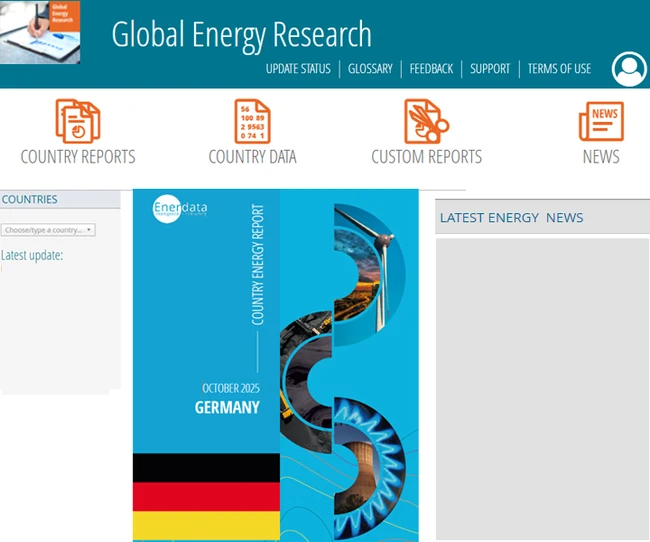
Interested in Global Energy Research?
Enerdata's premium online information service provides up-to-date market reports on 110+ countries. The reports include valuable market data and analysis as well as a daily newsfeed, curated by our energy analysts, on the oil, gas, coal and power markets.
This user-friendly tool gives you the essentials about the domestic markets of your concern, including market structure, organisation, actors, projects and business perspectives.