China has unveiled the details of its plans to reach peak emissions by 2030 and net-zero emissions by 2060, which promises that fossil fuels will account for less than 20% of its energy mix by 2060. The share of non-fossil fuel sources will reach 25% by 2030 and 80% by 2060. In addition, by 2030, the country intends to reduce its carbon intensity (i.e. CO2 emissions per unit of GDP) by 65% compared with 2005 levels and to reach a wind and solar capacity of 1,200 GW.
Coal (including lignite) still dominates the energy mix with 60% in 2020, but its share is decreasing rapidly (-11 points since 2010). It is followed by oil (19.5%), primary electricity (hydro, wind, solar and nuclear) (9%), natural gas (8%), and biomass (4%). The country's carbon intensity decreased by 18% over 2015-2020. As of end-2020, China had nearly 282 GW of installed wind capacity, and over 253 GW of solar capacity.
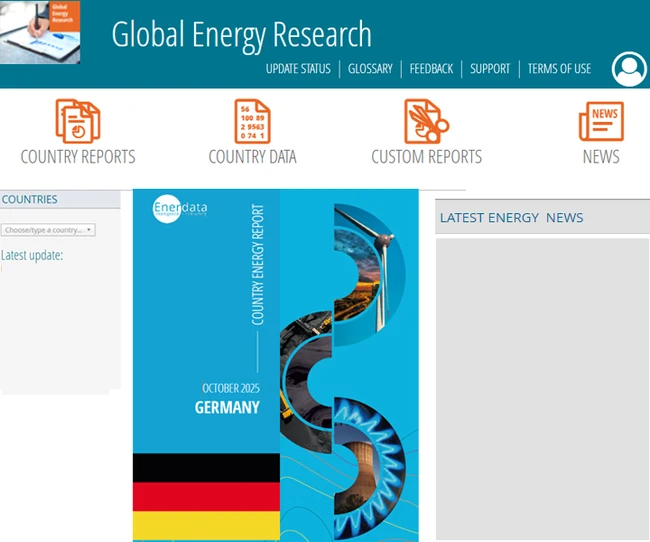
Interested in Global Energy Research?
Enerdata's premium online information service provides up-to-date market reports on 110+ countries. The reports include valuable market data and analysis as well as a daily newsfeed, curated by our energy analysts, on the oil, gas, coal and power markets.
This user-friendly tool gives you the essentials about the domestic markets of your concern, including market structure, organisation, actors, projects and business perspectives.