The federal government of Canada has reached an agreement with eight of the ten provinces to set up a national carbon price; energy-producing Saskatchewan refused to sign up on fears of degraded competitiveness for its companies, along with Manitoba, which required more money from the central government for health policies but announced that it could join the national price later.
In early October 2016, the federal government announced a national floor price on carbon, which will require all provinces to have implemented a carbon tax or a cap-and trade regime by 2018. The floor price would start at C$10/tonne in 2018 and would grow by C$10/tonne each year until reaching C$50/tonne by 2022. The national carbon price is part of Canada's efforts to meet its Paris commitment of reducing emissions by 30% by 2030, compared to 2005 levels. As announced in October, the national carbon price would be imposed in any province that doesn't join the new national plans by 2018. Saskatchewan, Nova Scotia or Newfoundland and Labrador, that have not implemented carbon pricing yet, have threatened to take legal action.
British Columbia has already introduced a carbon tax on gasoline, diesel, gas and propane since 2008, which currently stands at C$30/tonne; the province plans to stick to this price until other provinces catch up. Alberta plans to introduce a C$20/t carbon tax (on the same energies as British Columbia) in 2017, that would be raised to C$30/t in 2018. The province would agree a C$50/tonne price only if the federal government approves the construction of an oil sands pipeline. Some provinces have opted for cap-and-trade schemes: Quebec joined a cap-and-trade system with California (United States) in 2014 and Ontario will join them in 2017.
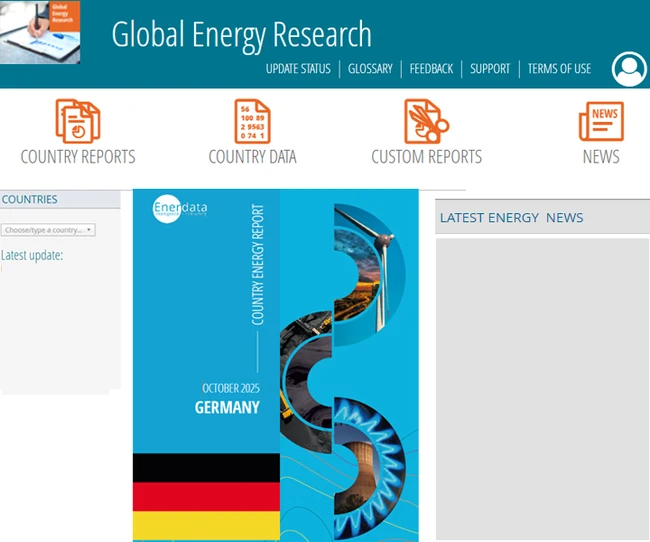
Interested in Global Energy Research?
Enerdata's premium online information service provides up-to-date market reports on 110+ countries. The reports include valuable market data and analysis as well as a daily newsfeed, curated by our energy analysts, on the oil, gas, coal and power markets.
This user-friendly tool gives you the essentials about the domestic markets of your concern, including market structure, organisation, actors, projects and business perspectives.