The government of South Korea has announced a "10-Year Plan (2026-2035) for Simultaneous Realization of Carbon Neutrality and Sustainable Economic Growth", along with a KRW1,000tn (USD747bn) investment over 10 years.
Under the so-called Korean Green Transformation (K-GX) plan, the government aims to reach 100 GW of renewable power capacity by 2030, focusing on solar and wind projects and on lowering renewable generation costs, and to adapt its power grid to support large-scale renewable generation; this includes replacing existing power lines with high-capacity ones by 2030 and fostering DC power transmission and distribution to allow renewable power generation to be directly supplied to end-users. The K-GX plan also aims to boost electric vehicles (EVs), targeting over 70% of electric and hydrogen vehicles in new vehicles sales by 2035, establishing a subsidy system for eco-friendly fuels, and restructuring EV subsidies. It also aims to accelerate transport electrification (public transports, two-wheelers, construction equipment and port facilities and vessels).
South Korea will seek to decarbonise its main industries and the five major greenhouse gas (GHG) emission sectors (steel, petrochemicals, cement, semiconductors, and refining). In the steel industry, a 300 kt/year H2 reduction steelmaking demonstration project will pave the way for decarbonisation, while electric naphtha cracking facilities (NCC) and greener fuels will help decarbonise the petrochemical and refining sector. The government will also foster 10 key green industries, namely EVs, batteries, solar power, wind power, SMRs, power equipment, power semiconductors, heat pumps, hydrogen, and CCUS, offering support to "super-gap" technologies and to climate-tech startups. In addition, the government plans to establish and expand "carbon-neutral leading cities", supporting urban solar power, distributed energy resources, electric mobility, and green renovation for energy-intensive public buildings, to shift away from fossil fuels. "Just transition special zones" will be designated to ensure a smooth transition to cleaner industries and a "2040 Coal power transition roadmap" will be drafted.
A total of KRW1,000tn (USD747bn) will be invested through 2035 to reduce market uncertainty regarding the green transition and stimulate private investment, including 79% in climate finance (focusing on regional areas and SMEs and on expanding the Climate Response Fund), and the remaining in fiscal spending.
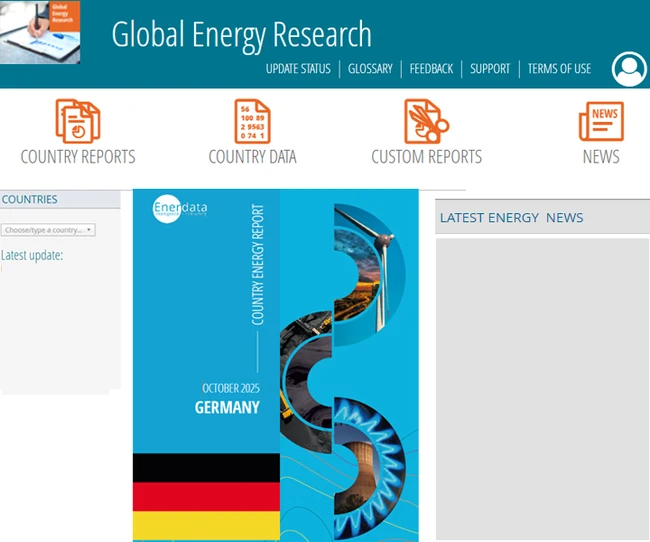
Interested in Global Energy Research?
Enerdata's premium online information service provides up-to-date market reports on 110+ countries. The reports include valuable market data and analysis as well as a daily newsfeed, curated by our energy analysts, on the oil, gas, coal and power markets.
This user-friendly tool gives you the essentials about the domestic markets of your concern, including market structure, organisation, actors, projects and business perspectives.