Singapore’s Energy Market Authority (EMA) has announced plans to connect to the grid five new gas-fired power plants between 2026 and 2031 to raise its generation capacity by about 26% (around 3 GW) (Singaporean government press release, 26/10/2026). According to EMA’s latest Five-Year Energy Infrastructure Plan the country aims to increase its current generation capacity of 12 GW, considering that its peak demand (8.6 GW in August 2026) is expected to reach 9.9-13 GW by 2031, driven mainly by semiconductor manufacturing, data centres and electric transport. Singapore also aims to raise its solar capacity from the current 2.3 GWp to 3 GWp by 2030 and to 4 GW by 2035. Energy storage is to rise from about 350 MWh to just over 1 GWh by 2030.
Additionally, EMA is evaluating proposals for additional gas-fired power projects to become operational by 2032 and may launch additional RFPs over the next 5 years to ensure sufficient power generation capacity to meet Singapore’s future electricity needs. Singapore is also studying the feasibility of establishing a new energy cluster at Pulau Tekong, that would integrate hydrogen-ready gas-fired power plants, an LNG terminal and other low-carbon technologies.
Natural gas supplies about 95% of Singapore’s electricity and the country’s LNG regasification capacity will rise from 10 Mt/year to 15 Mt/year when the second LNG terminal at Jurong Port is operational, by 2030. A further expansion of the first LNG terminal at Jurong is also under consideration.
Power grid investment is projected at SGD5.3bn (USD4.1bn) for 2025-2029, 11 times the investment of the previous five years. Seven new transmission substations are planned by 2031, against four in the previous five years. The transmission cable network is to grow from about 7,700 km to about 9,100 km by 2030. A feasibility study is under way on more than tripling cable tunnels from about 50 km. A second interconnector with Peninsular Malaysia is under feasibility study and could support up to 2 GW by 2030. The existing link allows up to 1 GW of bidirectional flow. Singapore will also develop landing sites for subsea cables for low-carbon imports.
Interested in Power Plants?
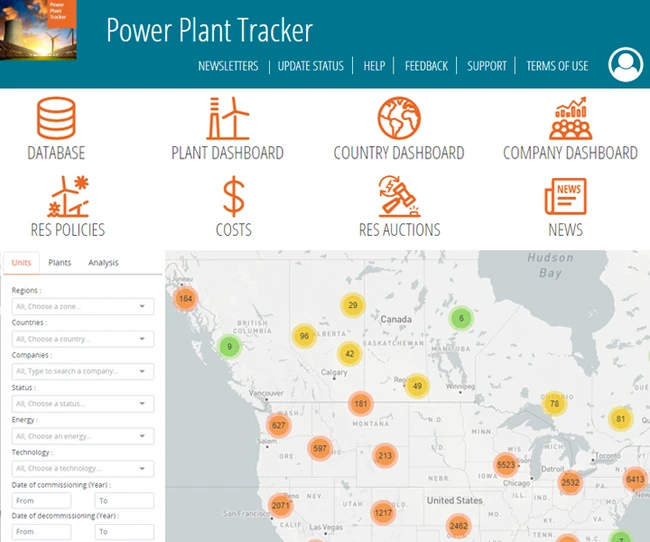
Enerdata has developed a market research service to screen, monitor and analyse the development of power generation assets.
Power Plant Tracker offers an interactive database and a powerful search engine covering power plants worldwide – including both installed and planned capacities for renewables and fossil fuels.