Saudi Arabia has published its Second Nationally Determined Contribution (NDC 2.0), in which the country sets a target to “reduce, avoid, and remove” GHG emissions by 335 MtCO₂eq annually over 2030–2040, based on a 2019 baseline. The updated NDC 2.0 reflects greater ambition compared with the previous plan from 2021, which aimed to reduce, avoid, or remove 278 MtCO₂eq annually by 2030, using the same 2019 baseline, an increase of roughly 20% compared with the original NDC. The document also emphasizes that the plan is unconditional, not contingent on international financial support.
Additionally, the document states that the country “has tendered 57.5 GW of renewable energy capacity, of which 12.3 GW has been connected to the grid, 10.7 GW is under construction, 15.7 GW has already been commercially signed, and 18.8 GW is at different stages of development.” Under its Circular Carbon Economy (CCE) approach, Saudi Arabia aims to advance large-scale deployment of carbon capture, utilization, and storage (CCUS) technologies, with current CCUS projects in the Kingdom capturing 1.3 MtCO2/year and the Jubail CCS hub expected to capture and store 9 MtCO2/year by 2028. The country also aims to enhance its reliance on highly efficient gas-fired power plants and to expand its Master Gas System to meet the growing energy demands of emerging sectors.
GHG emissions in Saudi Arabia have been growing at a slower pace since 2010, at an average of +2.2%/year, compared with +4.6%/year between 1990 and 2010. Despite this slowdown, Saudi Arabia remains one of the countries with the highest CO₂ emissions per capita, exceeding 16 tCO₂ per capita in 2024, or roughly four times the world average.
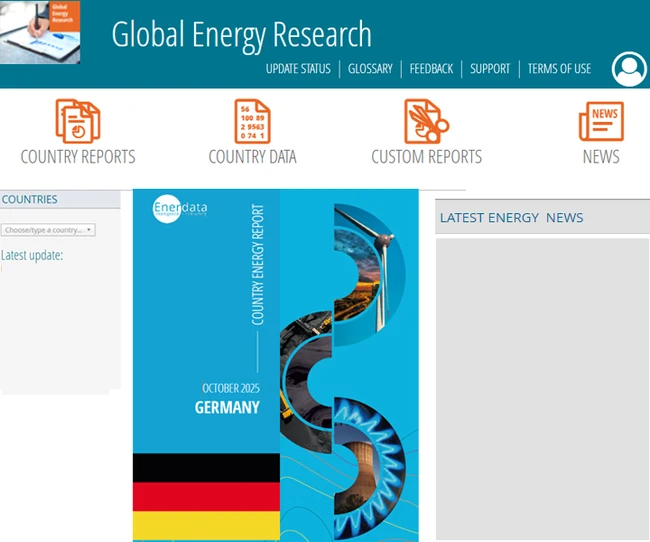
Interested in Global Energy Research?
Enerdata's premium online information service provides up-to-date market reports on 110+ countries. The reports include valuable market data and analysis as well as a daily newsfeed, curated by our energy analysts, on the oil, gas, coal and power markets.
This user-friendly tool gives you the essentials about the domestic markets of your concern, including market structure, organisation, actors, projects and business perspectives.