RWE has released its 2020 results, posting a net income of €995m (-88%); adjusted net income reached €1.2bn. The company’s power generation decreased by 4% in 2020 to 147 TWh, of which 34% was generated from natural gas and 30% from lignite and hard coal. Renewables accounted for 22% (including pumped-storage hydropower and biomass) and nuclear for 14 %. Thermal power generation decreased by 15% to 98 TWh, including -30% for coal, due to the decommissioned its last hard coal-fired power plants in Germany and the United Kingdom in 2020, and to the first lignite-fired unit taken off the grid as a consequence of the German coal phaseout. Renewable power generation surged by 71% to 28 TWh, spurred by a 92% growth in wind power (+70% for offshore wind and +103% for onshore wind) and tripling solar generation. Indeed, RWE successfully completed transactions with E.ON and completed wind projects and solar plant with a total capacity of 800 MW.
As of December 2020, RWE had nearly 41 GW of installed capacity, including 14 GW of gas, 12 GW of lignite and coal, nearly 12 GW of renewables (including 8.5 GW of wind and 2.9 GW of hydropower) and 2.8 GW of nuclear capacity. By the end of 2022, RWE aims to expand its portfolio of wind and solar power plants from over 9 GW to more than 13 GW. The company is currently building new plants with an installed capacity of 3 GW. The project pipeline comprises development projects totalling about 34 GW.
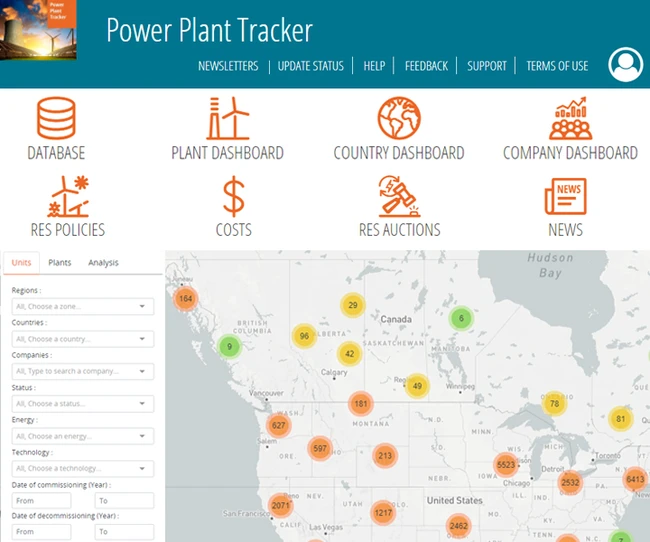
Interested in Power Plants?
Enerdata has developed a market research service to screen, monitor and analyse the development of power generation assets.
Power Plant Tracker offers an interactive database and a powerful search engine covering power plants worldwide – including both installed and planned capacities for renewables and fossil fuels.