Russia and Kazakhstan have signed an engineering, procurement and construction (EPC) contract for the development of Kazakhstan’s first nuclear power plant, according to Russian state nuclear corporation Rosatom. “Rosatom will be responsible for the entire project implementation cycle, from design and procurement through construction and commissioning to the handover of the completed facility to the customer”, the company said in a press release.
The Balkhash nuclear power plant will consist of two power units fitted with Russian-designed VVER-1200 Generation III+ reactors, providing a combined capacity of 2.4 GW. The reactors are designed for a 60-year service life, which can be extended by an additional 20 years. Site investigation activities, launched in August 2025, are currently ongoing at the location selected for the future nuclear power plant. According to the company, the investigations are expected to be completed in 2027, after which engineers will start preparing the documentation required to secure the permits necessary for the construction of the power units.
Kazakhstan currently has no nuclear power capacity, but it is the world’s largest uranium producer. Under its Strategy 2050, the country aims to reach 2 GW of nuclear capacity in its power mix by 2050. Kazakhstan also intends to develop a second and third nuclear power plant. In September 2025, the country signed a strategic partnership with China in the nuclear sector and indicated that it remains open to cooperation with other international companies.
According to our data, the country’s electricity generation capacity mix is still dominated by coal, accounting for 46% in 2025, followed by gas at 24% and hydropower at 10% (Enerdata Global Energy & CO2 Data).
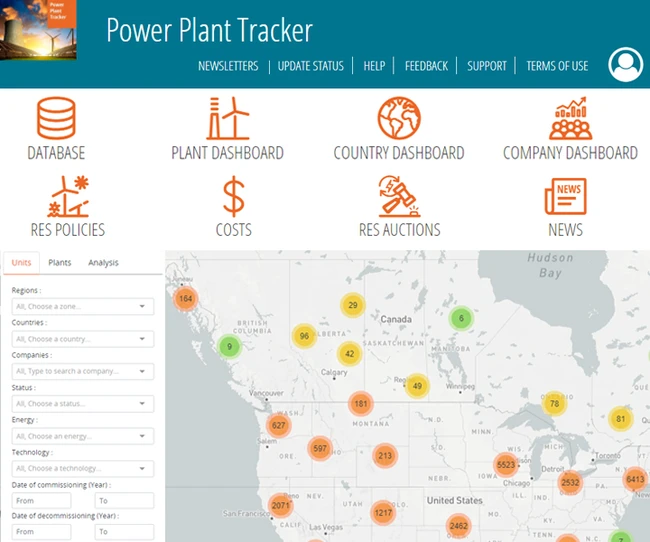
Interested in Power Plants?
Enerdata has developed a market research service to screen, monitor and analyse the development of power generation assets.
Power Plant Tracker offers an interactive database and a powerful search engine covering power plants worldwide – including both installed and planned capacities for renewables and fossil fuels.