Hungary’s Paks nuclear power plant has returned to full capacity after several weeks of reduced output triggered by record-low water levels on the Danube River (Hungary’s Prime Minister statement, 26/08/2026). The Hungarian Prime Minister also stated that construction of a submerged weir intended to raise water levels near the plant’s cooling-water intake was advancing ahead of schedule.
During the summer of 2026, a severe heatwave and drought drove the Danube to record-low levels, forcing the Paks nuclear power plant to progressively cut generation and temporarily shut down several units due to insufficient cooling water. This created a significant risk for Hungary’s electricity supply, as the plant provides around 40% of the country’s electricity. Generation has since been progressively restored as water levels recovered and emergency measures were put in place.
The Hungarian government has also recently raised concerns over the construction of the second nuclear facility, Paks II (2.4 GW), in light of the severe Danube drought. If completed, the planned Paks II reactors would likewise depend on Danube water for cooling, leading the government to assess whether modifications may be necessary.
The Danube is among the world’s most international rivers, passing through or along the borders of 10 countries, from Germany to the Black Sea. Consequently, low water levels during periods of drought could generate significant tensions over electricity supplies across multiple countries.
Interested in Power Plants?
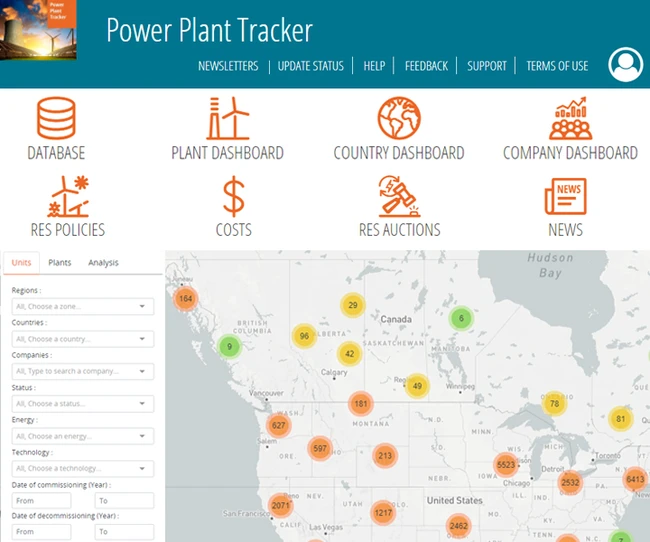
Enerdata has developed a market research service to screen, monitor and analyse the development of power generation assets.
Power Plant Tracker offers an interactive database and a powerful search engine covering power plants worldwide – including both installed and planned capacities for renewables and fossil fuels.