Danish energy company Ørsted has unveiled plans for a new offshore wind development in Taiwan, named Dadu 2, with a proposed capacity of up to 2 GW (Taiwan’s Ministry of Environment website).
The renewable energy developer intends to deploy wind turbines ranging from 14 MW to 22 MW each, although the final number of turbines and their configuration have yet to be determined. Electricity produced by Dadu 2 is expected to be transmitted via an onshore substation before being connected to either existing or future grid infrastructure operated by Taiwan Power Company.
The project has now moved into the environmental assessment process, which includes a public consultation phase.
Ørsted is also developing another offshore wind project in the area, known as Dadu I. According to the Ministry of Environment’s database, the project could have an installed capacity of up to 924 MW.
At the end of July 2026, Taiwan unveiled its 2026-2039 Offshore Wind Power Promotion Plan, targeting 24.7-27.9 GW of installed offshore wind capacity by 2039, up from around 4.9 GW currently installed (KEI, 28/07/2026).
Taiwan’s offshore wind sector has encountered challenges as the first two Round 3 tenders (R3-1 and R3-2) allocated only 2.3 GW and 2.7 GW, respectively, both below the targeted 3 GW allocation level. Several projects subsequently had their development rights withdrawn. As a result, the 2030 offshore wind target was reduced in 2025 from 13.1 GW to 10.9 GW, while the 2035 target was lowered from 20.6 GW to 18.4 GW. The government’s initial policy framework aimed to tender 15 GW of offshore wind capacity between 2026 and 2035, corresponding to an average of 1.5 GW per year (Enerdata Global Energy Research).
Interested in Power Plants?
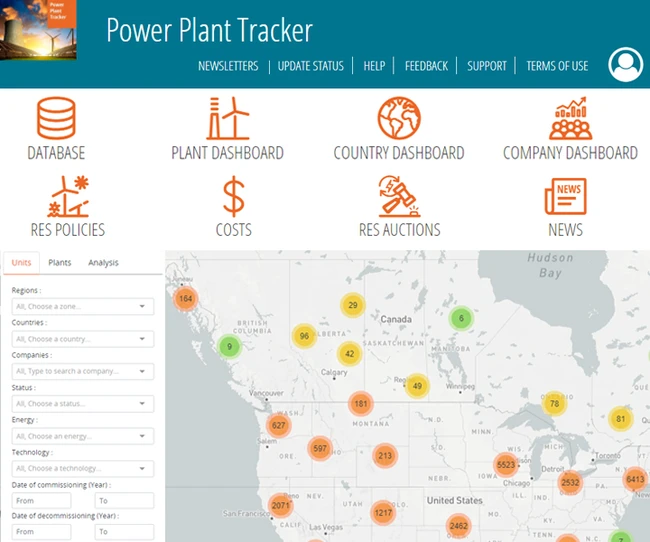
Enerdata has developed a market research service to screen, monitor and analyse the development of power generation assets.
Power Plant Tracker offers an interactive database and a powerful search engine covering power plants worldwide – including both installed and planned capacities for renewables and fossil fuels.