Lithuania's electricity transmission system operator Litgrid has unveiled an energy islands model aimed at strengthening the resilience of the country's electricity system in emergency situations. Under the proposed concept, seven electricity system regions will be established across Lithuania, each temporarily capable of operating independently. The plan foresees the construction of 10 new power plants by 2033, adding 800 MW of generation capacity (Lithuania’s Ministry of Energy statement, 10/11/2026). According to Litgrid, the new power plants will provide flexible generation capacity, enabling them to respond rapidly to system requirements and maintain grid stability. Some existing power plants will also need to be upgraded to increase their capacity and ensure electricity supply during emergencies. This will allow four energy islands to operate independently at reduced capacity as early as 2028.
"Energy islands are regions of the electricity system that can operate independently when the main 330 kV transmission network is unavailable. This can happen due to natural disasters, sabotage, or other extreme situations”, stated the head of the grid operator. These islands will be established based on the configuration of the electricity transmission network and its main connection nodes.
The deployment of new flexible generation capacity will follow the principles of technological neutrality and maximum competition. Litgrid will organise service auctions, under which successful bidders will be required to install new flexible electricity generation facilities within five years and subsequently provide regional isolated operation services for 15 years.
Subject to the approval of the planned legal and regulatory amendments, the auctions are expected to be launched in 2027. With the new power plants scheduled to be commissioned by 2033, the energy islands model is expected to become fully operational. According to Litgrid's estimates, demand for these new services will add EUR0.67c/kWh to the electricity transmission tariff from 2033 onwards. However, the new flexible power plants are expected to help reduce peak electricity prices and lower average wholesale electricity market prices.
According to our data, Lithuania's installed capacity reached 7.2 GW at the end of 2025, of which 72% are renewables. The share of renewables has risen sharply; the wind capacity has doubled since 2023 (2.5 GW in 2025) (35% of the total capacity and over 41% of power generation) and solar capacity reached 1.9 GW in 2025 (26% of the capacity and 21% of power generation). Hydropower accounts for 12% of the capacity (0.9 GW) and 8% of power generation (Enerdata Global Energy & CO2 Data).
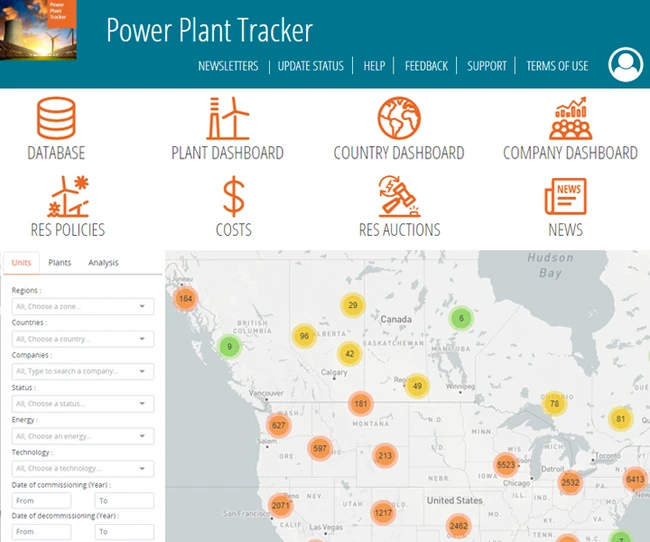
Interested in Power Plants?
Enerdata has developed a market research service to screen, monitor and analyse the development of power generation assets.
Power Plant Tracker offers an interactive database and a powerful search engine covering power plants worldwide – including both installed and planned capacities for renewables and fossil fuels.