Japan has unveiled a plan to enhance the resilience of its energy supply, including measures to support pipeline projects designed to bypass the Strait of Hormuz (Japanese government press release, 26/08/2026).
Under the plan, Japan will work with Middle Eastern oil-producing countries on pipeline projects that circumvent the strait, providing financial support through the Japan Organization for Metals and Energy Security (JOGMEC). The strategy also calls for the creation of national naphtha reserves in the form of crude oil, following supply shortages of the petrochemical feedstock that disrupted operations. The plan also includes measures to expand lower-carbon energy sources, including nuclear power and renewables. The package, which will include legislative measures, is expected to be finalised by the end of 2026.
The Japanese Prime Minister ordered the package to strengthen the country’s energy resilience after the start of the war in Iran and the effective closure of the Strait of Hormuz underscored Japan’s heavy dependence on crude oil from the Middle East.
According to our data Japan is the world’s fifth largest oil importer, as it has nearly no production. Due to the Iran war and disruptions in the Strait of Hormuz, in March 2026, Japan released 80 mbl of oil from its strategic reserves (equivalent to 45 days of supply), to mitigate global disruptions. Japan is dependent on the Middle East for around 96% of its oil supplies and gets around 90% of its oil shipments via the Strait of Hormuz. Japan's main suppliers are the United Arab Emirates and Saudi Arabia (44% and 40%, respectively).
However, on a wider timescale, crude oil imports had been decreasing regularly since 2000 (-3.2%/year over 2015-2025) due to slower economic growth with an aging population, coupled with structural trends in the transport sector (shift to electric cars and reduced car use among young generations) and the gradual phaseout of oil-fired power plants (Enerdata Global Energy Research).
To secure its energy supply, Japan is relying on nuclear power and renewables. Under the 7th Strategic Energy Plan (2025), the country aims for renewables to account for 40–50% of the power mix by 2040, while nuclear power is targeted to represent 20–22%.
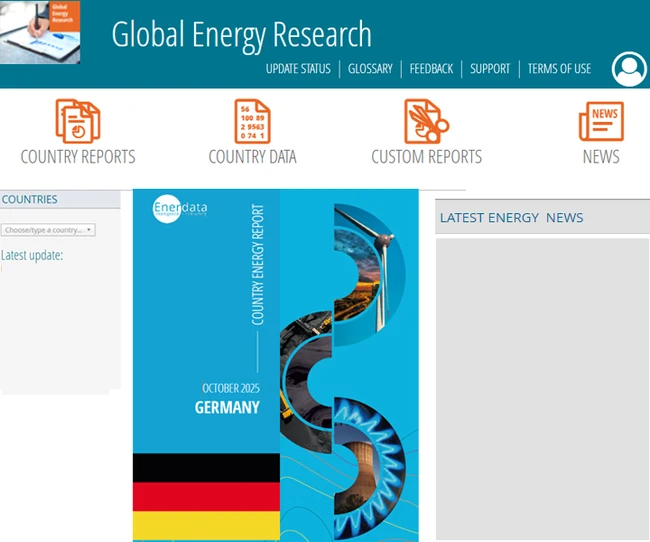
Interested in Global Energy Research?
Enerdata's premium online information service provides up-to-date market reports on 110+ countries. The reports include valuable market data and analysis as well as a daily newsfeed, curated by our energy analysts, on the oil, gas, coal and power markets.
This user-friendly tool gives you the essentials about the domestic markets of your concern, including market structure, organisation, actors, projects and business perspectives.