Iraq’s government has reached dozens of agreements with US companies following the official visit of Iraq’s Prime Minister to the United States, including a deal aimed at restoring an energy export route that would allow Iraq to ship its oil without relying on the Strait of Hormuz (Iraq News Agency, 19/07/2026).
The preliminary agreements, signed during a United States-Iraq business summit, come as Iraq attempts to reduce its dependence on the Strait of Hormuz, where oil transit has been significantly disrupted amid the US-Israel war against Iran. As part of this strategy, Iraq and Syria concluded a cooperation agreement to rebuild the long-inactive Iraq-Syria crude oil pipeline, which connects the oil-producing Kirkuk region in northern Iraq to Syria’s Mediterranean port of Baniyas. The pipeline has remained largely out of operation since being damaged during the 2003 US-led invasion of Iraq.
According to Iraq’s state news agency, US energy company Chevron will oversee the project under the agreement. “Upon rehabilitation, this groundbreaking project will have an initial transport capacity of 2 mb/d of crude oil,” stated the US State Department, which welcomed the agreement. Alongside the Syria pipeline initiative, Chevron also signed two additional agreements with Iraq aimed at increasing oil production.
In addition, ConocoPhillips announced that it had agreed to acquire a 42% stake in BP Energy of Kirkuk, partnering with the British oil major BP to redevelop four producing oilfields in northern Iraq. The agreement covers more than 3 Gboe in initial gross recoverable resources, while also offering further exploration opportunities across the Baba and Avanah domes of the Kirkuk oilfield, as well as the Bai Hassan, Jambur and Khabbaz fields.
Furthermore, Iraq has signed an agreement with GE Vernova to implement a nationwide power sector development program. The initiative includes the construction of CCGT power plants using GE Vernova's technologies - focusing on a central project in Al-Faw - and the expansion of gas-fired power plants at the Al-Mansouriya I and II, Mulla Abdullah, Najaf, Samawah, Dhi Qar, Diwaniyah, and Karbala power plants. The agreement also includes upgrades to the electricity transmission network, the development of a cross-border HVDC interconnection with Saudi Arabia, modernization of the national grid, and financing mechanisms to support these projects.
Overall, the initial agreements concluded by Iraqi officials with US companies, across several sectors including energy, amount to more than USD60bn (Reuters, 17/07/2026).
Interested in Power Plants?
Enerdata has developed a market research service to screen, monitor and analyse the development of power generation assets.
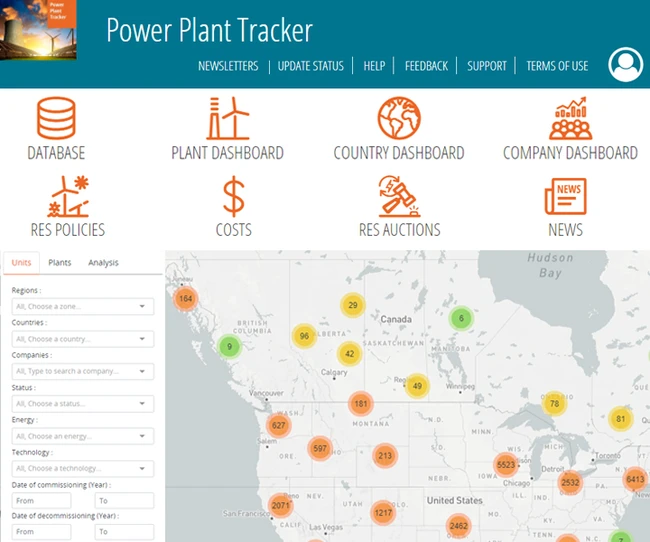
Power Plant Tracker offers an interactive database and a powerful search engine covering power plants worldwide – including both installed and planned capacities for renewables and fossil fuels.