The National Development and Reform Commission and the National Energy Administration of China have jointly issued the "15th Five-Year Plan for Building a New Energy System", which sets objective for the Chinese energy sector over the next five years, targeting 50% of non-fossil sources in power generation by 2030, compared to 41% in 2025 (CnEVPost, 25/06/2025), with around 30% of power generation coming from solar and wind. In addition, wind and solar should exceed 50% of installed capacity by 2030 (47% in 2025), and power-sector intensity must fell by more than 10% over the five-year period.
China also aims to expand non-pumped hydro energy storage capacity to 300 GW by 2030, pumped-storage hydropower capacity to 160 GW (62 GW in 2025), nuclear capacity, which should rely mainly on third-generation pressurised water reactor technology, to 110 GW (up from 62 GW in 2025) and renewable-energy-based hydrogen production to 2 Mt/year.
A central feature of the plan is the use of electric vehicles (EVs) as a flexible resource to help balance the power grid, with adjustable charging capacity from vehicle-to-grid (V2G) interaction reaching about 50 GW by 2030. The number of charging facilities is expected to double, reaching 40 million units by 2030. In addition, the capacity of virtual power plants (VPPs) should exceed 50 GW by 2030.
Overall, non-fossil sources are expected to account for 25% of the country’s energy consumption (14% in 2025). The plan calls for “a clean, low-carbon, safe, and efficient new energy system by 2030”, with a unified national electricity market and where coal and oil consumption have peaked by 2030.
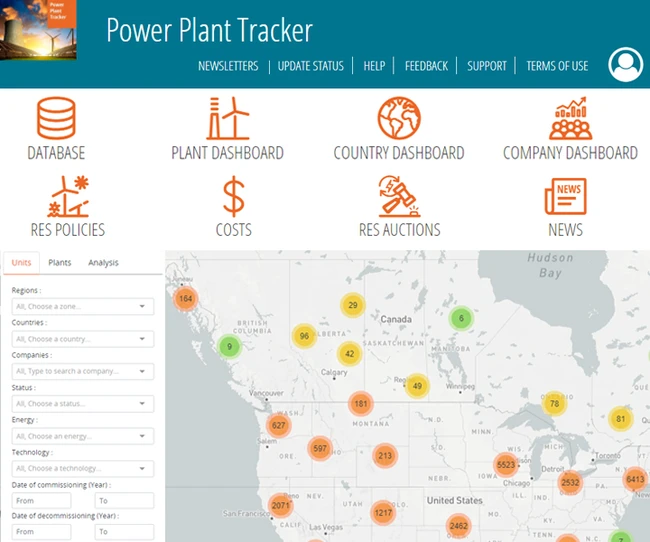
Interested in Power Plants?
Enerdata has developed a market research service to screen, monitor and analyse the development of power generation assets.
Power Plant Tracker offers an interactive database and a powerful search engine covering power plants worldwide – including both installed and planned capacities for renewables and fossil fuels.