The Canadian Senate has passed the Canadian Net-Zero Emissions Accountability Act (Bill C-12), which sets targets for every five years from 2030 to 2050 a decade in advance on a path to reach net-zero emission by 2050. The objectives will be set by the Canadian Ministry of the Environment and the emission reduction plan, a progress report and an assessment report for each target will be presented to each House of Parliament; the government will have to provide explanations if the targets are not met and proposals on how to address the shortcomings.
In April 2021, the country pledged to cut greenhouse gas (GHG) emissions in 2030 by 36% compared to 2005 levels, according to Canada’s budget for the fiscal year ending in March 2022. The country’s previous 2030 target was to cut GHG emissions by 30%. Canada’s GHG emissions increased by 0.2% in 2019 to 730 MtCO2eq, i.e., 21.4% higher than 1990 levels. This evolution was largely driven by increased emissions from oil and gas extraction as well as transport.
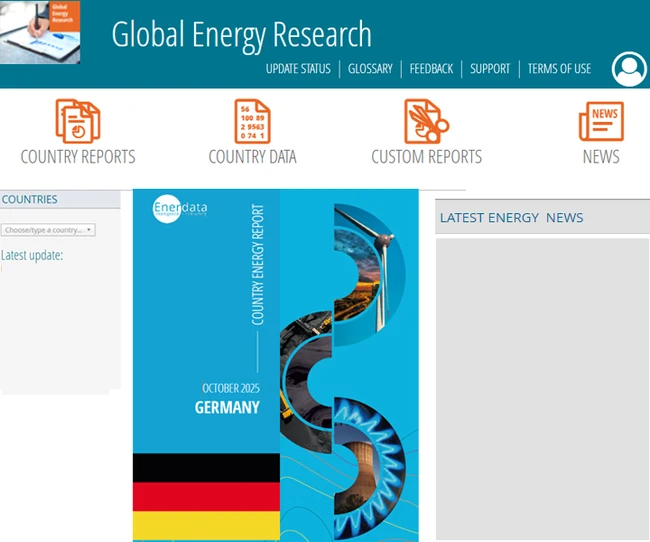
Interested in Global Energy Research?
Enerdata's premium online information service provides up-to-date market reports on 110+ countries. The reports include valuable market data and analysis as well as a daily newsfeed, curated by our energy analysts, on the oil, gas, coal and power markets.
This user-friendly tool gives you the essentials about the domestic markets of your concern, including market structure, organisation, actors, projects and business perspectives.