Bangladesh has submitted its upgraded Nationally Determined Contribution (NDC 3.0) to the UN Framework Convention on Climate Change (UNFCCC). The country expects emissions to rise sharply from 252 MtCO2eq in 2022 to 418.40 MtCO₂eq by 2035 under the BAU scenario due to population growth, urbanization, industrial expansion, and rising energy demand. According to the NDC 3.0, energy was the largest GHG emission source in 2022 (49%, mainly from power generation, transport, industry, households, and fugitive emissions), followed by AFOLU (38%, mainly from livestock and rice production), waste (11%) and industrial processes (IPPU, 3%).
The NDC 3.0 sets an unconditional GHG emission reduction target of 6.39% from the BAU scenario by 2035 (26.7 MtCO₂eq reduction), while under the conditional scenario the emission reduction increases to 13.92%, representing a reduction of up to 58.2 MtCO₂eq by 2035, compared to the BAU scenario. Bangladesh plans to use mitigation actions (including the expansion of renewable energy generation and reduction of transmission and distribution losses) to reduce its emissions from the energy sector, to 69.8 MtCO₂eq by 2035; emissions could also be cut by 12.7 MtCO2eq in the AFOLU sector, while reductions would be lower in the IPPU and waste sectors.
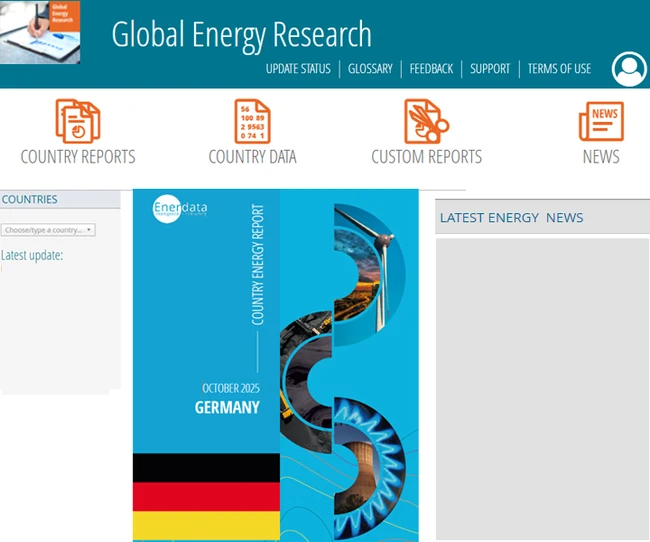
Interested in Global Energy Research?
Enerdata's premium online information service provides up-to-date market reports on 110+ countries. The reports include valuable market data and analysis as well as a daily newsfeed, curated by our energy analysts, on the oil, gas, coal and power markets.
This user-friendly tool gives you the essentials about the domestic markets of your concern, including market structure, organisation, actors, projects and business perspectives.