The European Union Agency for the Cooperation of Energy Regulators (ACER) has published its first hydrogen monitoring report, finding that the H2 market has not a developed a strong enough demand to reach its strategic goal of 20 Mt renewable hydrogen consumption by 2030. The report details how the current EU H2 market has a series of challenges that may impede the achievement of the Union’s 2030 strategic goals, mainly a low demand for renewable and low-carbon H2 (with a slow increase rate), a limited electrolyser capacity (with few advancements and an insufficient planned capacity), high production costs of renewable H2 (3 to 4 times higher than blue H2 produced from natural gas) and uncertainty around demand threatening the development of planned H2 infrastructure.
ACER recommends the transposition of EU hydrogen and decarbonised gas laws into national laws with measures for their implementation, to increase renewable hydrogen’s cost competitiveness by speeding up the deployment of electrolysers and the decarbonisation of the electricity sector, to consider incremental infrastructure development based on market needs in a context of uncertain demand to avoid over-investments and reduce costs, as well as considering the repurposing of gas networks for H2 to minimise costs, all of this to address risks in financing H2 networks and increase market certainty.
The EU aims to install at least 40 GW of electrolysers, to produce 10 Mt and import 10 Mt of renewable hydrogen in the EU by 2030. The EU also targets to increase industrial hydrogen consumption with renewable H2 to 42% by 2030 and 60% by 2035.
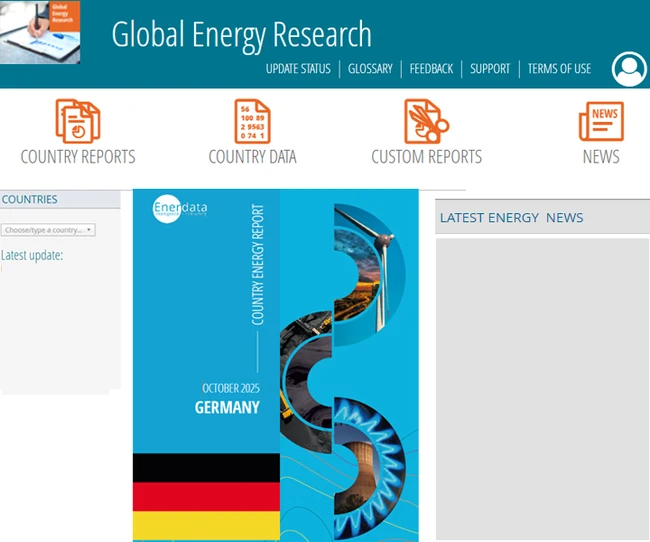
Interested in Global Energy Research?
Enerdata's premium online information service provides up-to-date market reports on 110+ countries. The reports include valuable market data and analysis as well as a daily newsfeed, curated by our energy analysts, on the oil, gas, coal and power markets.
This user-friendly tool gives you the essentials about the domestic markets of your concern, including market structure, organisation, actors, projects and business perspectives.