Global Energy Transition Statistics
- Slow progress in electrification, with electricity representing only 22% of final energy consumption in 2025—an increase of just 4 percentage points compared with 2010.
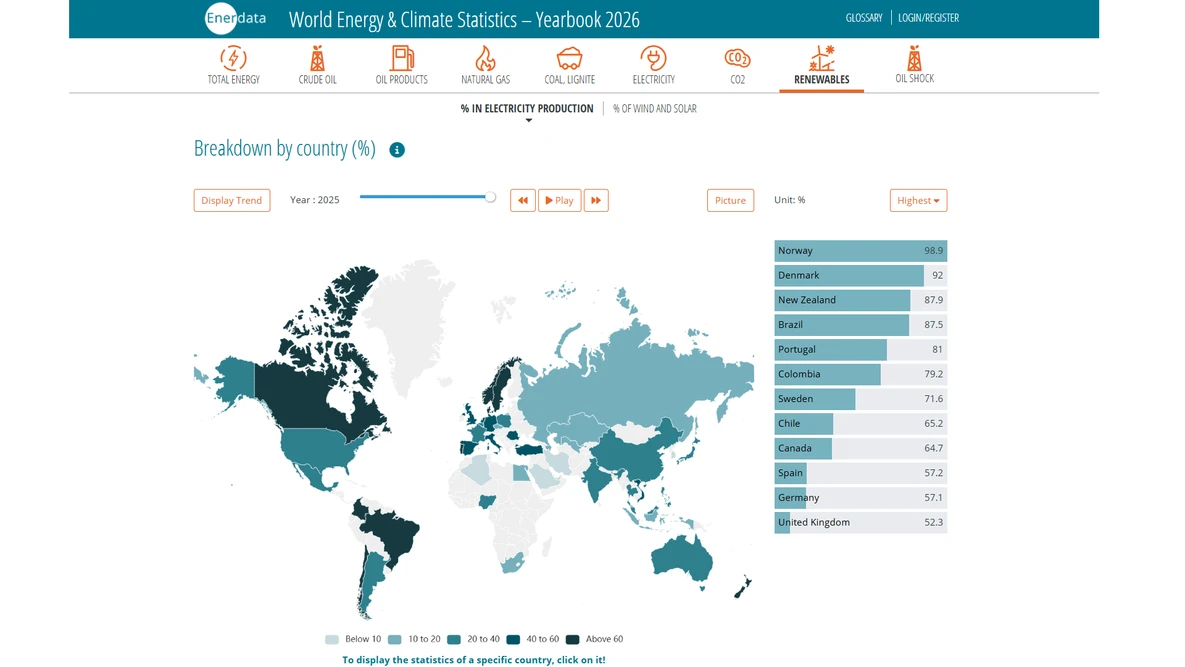
- Record solar and wind deployment, pushing their combined share of the global power mix up by 2 percentage points to reach 17% in 2025.
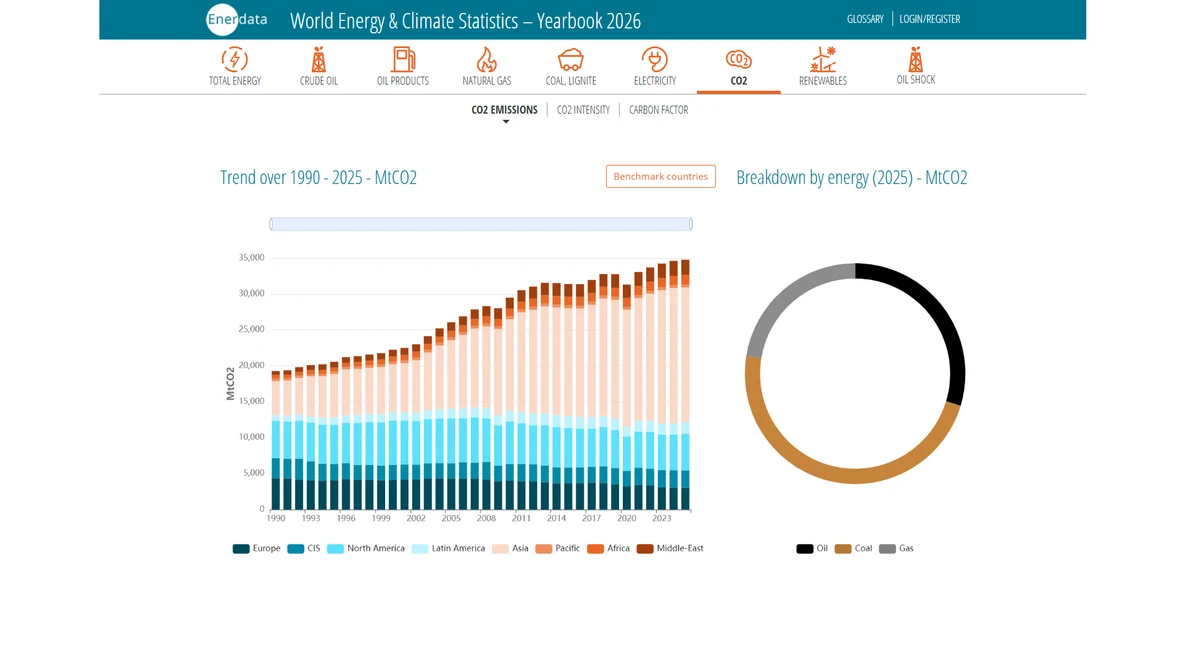
- Moderating CO₂ emissions, which grew by less than 1% in 2025, with emissions even beginning to decline in China.
- Rising electricity demand driven by new uses such as data centres, electric vehicles, and industrial electrification, with China and the United States emerging as the main contributors.
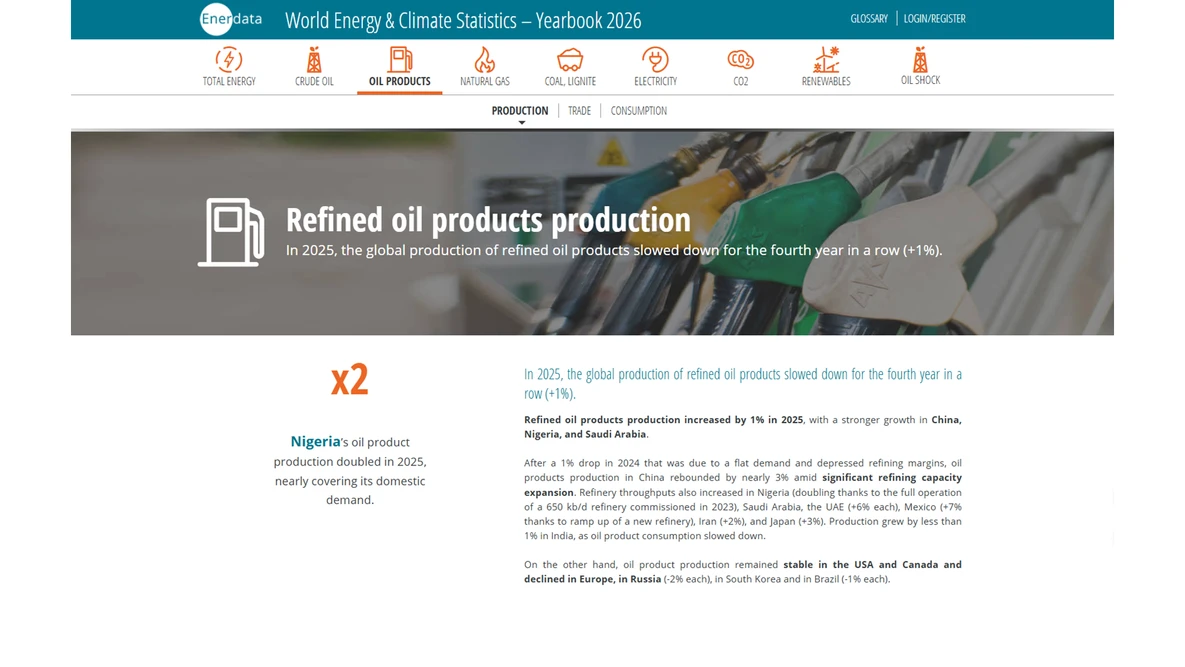
Enerdata Yearbook is an online application that allows users to access and download the latest world energy and climate statistics, and decarbonisation indices through an interactive interface with dynamic maps and graphs.
Access world energy statistics:
- on production, consumption and trade of oil, gas, coal, power, renewables and CO2 emissions from fuel combustion;
- covering 60 countries and regions throughout the world;
- from 1990 to 2025;
- on decarbonisation indicators;
- with animated data evolution: Visualise trends over time from 1990 to 2025.
- through an interactive map: Easily select areas with zoom in and out controls.
- with country benchmarking: Compare data across different countries.
- with flexible period selection: Choose any time range to view data.
- with free data export: Export data globally or by specific energy sources.
World decarbonisation indices in 2025
Related Information
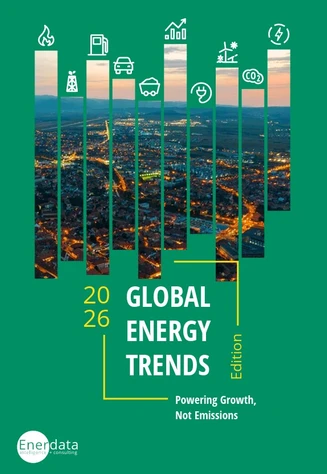
Global Energy Trends - 2026 Edition
Powering Growth, Not Emissions
Based on the first consolidated 2025 energy and CO₂ data, this edition provides a comprehensive analysis of the global energy landscape, combining robust figures with expert insights on market dynamics and structural trends.
A major challenge remains: energy demand and emissions are not yet structurally decoupled from economic growth.
In this context, evolving geopolitical tensions also underline that the energy transition is not only a climate issue, but increasingly a strategic and economic priority.